
Lower Body Nerves • Grounded Movement Library
Sciatic Nerve Guide
The sciatic nerve is the main “superhighway” from the low back/pelvis into the leg. When it’s irritated or not gliding well, symptoms can feel like deep buttock pulling, radiating leg pain, tingling, burning, or a “tight hamstring” that stretching doesn’t fix. This page focuses on gentle, nerve-friendly motion — not forcing a stretch.
Sciatic Anatomy (Quick + Useful)
The sciatic nerve is formed from nerve roots L4–S3. It travels through the pelvis into the buttock region, down the back of the thigh, then branches into the tibial and common peroneal (fibular) nerves to supply the lower leg and foot.
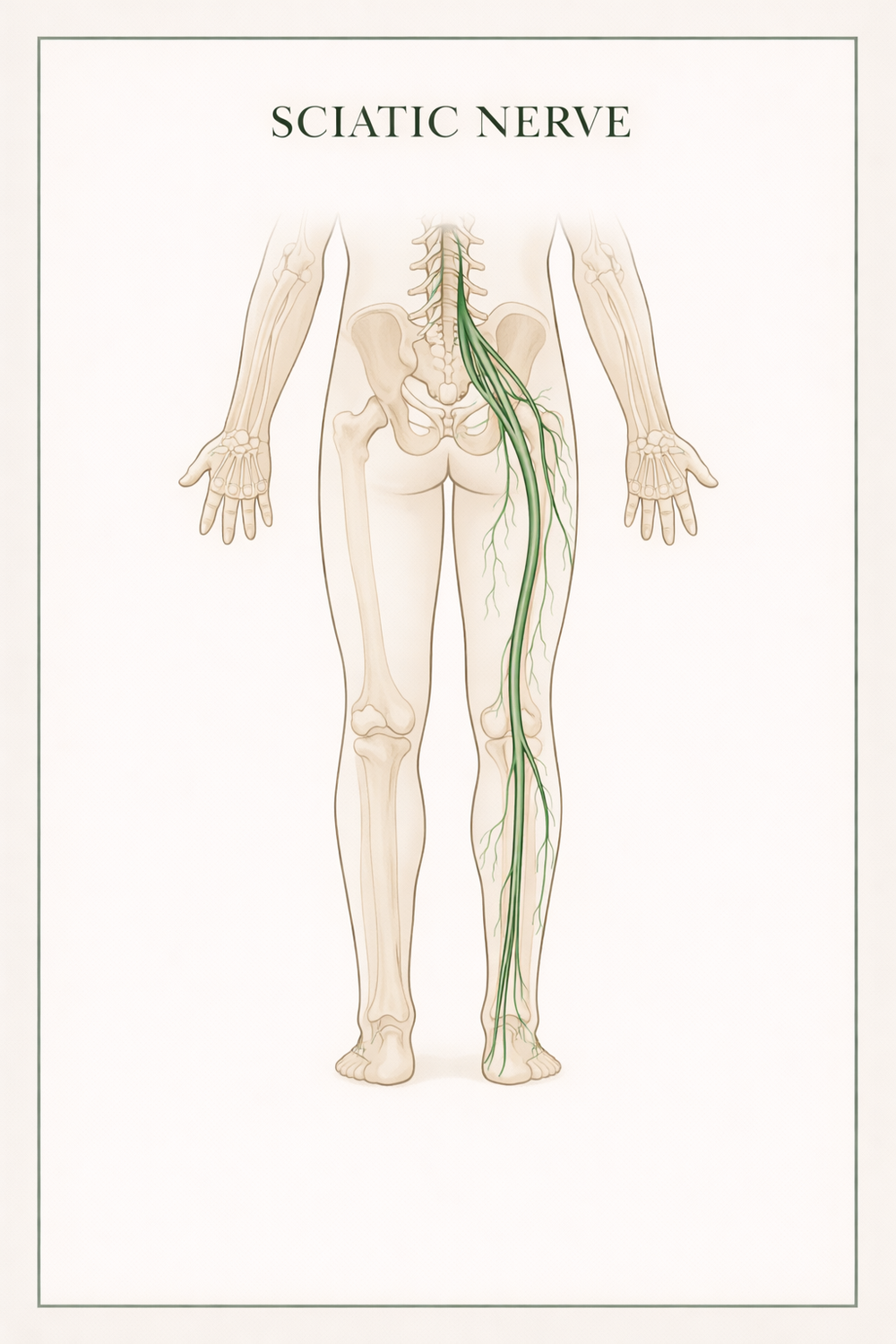
What sciatic irritation often feels like
- Deep buttock pain with pull into the thigh
- Radiating symptoms down the back/side of the leg
- Tingling/burning into calf/foot (often worse with sitting)
- A “hamstring that won’t stretch” (stretching makes it crankier later)
How to use this guide
- Pick ONE video per session (don’t stack everything at first)
- Keep it gentle (3–4/10 intensity)
- Your goal: feel better after, not worse
- If you flare next day: reduce range + reduce time
Sciatic Videos
Start with the gentlest option and build consistency. If a session flares you, it’s feedback to scale down range/time or choose a different entry point.
Start Here • Playlist
Quick Access Videos
Simple progression (2 weeks)
- Days 1–4: One gentle video daily (2–4 minutes)
- Days 5–10: Same video daily OR alternate 2 videos if baseline is improving
- Days 11–14: Add one “progression” video 2–3x/week
- Rule: next-day flare = scale down
Find the Location of Your Pain
Not all leg pain is “sciatica.” This short assessment helps match symptom patterns to common nerves/structures. It’s educational — not a diagnosis.
Lower Extremity Nerve Pain Assessment
Answer a few questions to see what nerve/structure patterns may match your symptoms.
Educational content only. If you develop new neurological deficits, severe worsening symptoms, chest pain, fainting, or red-flag symptoms, seek urgent medical evaluation.